
A lot of people are curious about injectables long before they are fully ready to book. The goal is usually simple: look fresher, less tired, and still like yourself.
That is where things can get a little noisy. Social media makes everything look quick, cheap, and easy, like changing a porch light bulb. Your face is not a weekend hardware run, though, and a good result usually comes from careful planning, good product choice, and a provider who understands facial balance.
For most people, the first real question is not whether Botox or filler works. It is who should do it, what makes one office safer than another, and how to tell the difference between a thoughtful plan and a fast sale.
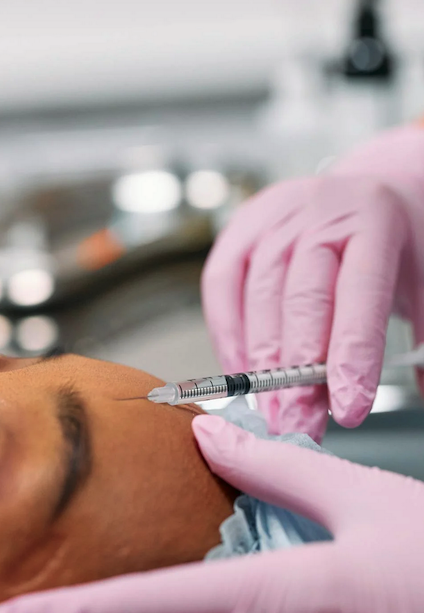
Start with the basics: Botox and filler are not the same thing
Botox Cosmetic is a prescription medicine that is injected into specific muscles to soften certain expression lines for a temporary period in adults.[1] Dermal fillers are different. Fillers add support or volume where the face has thinned, flattened, or creased over time.[2]
Think of Botox like easing up a hinge that has been folding the same spot over and over. Think of filler like putting a little structure back into a cushion that has lost some of its shape. They can work beautifully together, but they do very different jobs.
That matters because people often ask for the wrong thing by name. Some lines are caused mostly by muscle movement, and some are caused by volume loss, skin quality, or both. A good consultation sorts that out before a single syringe or unit is opened.
When people search Botox and Fillers Near Me, what they are really asking is, “What will help my face look better without making me look strange?” That is the right question. It shifts the focus away from trends and back to anatomy, proportion, and common sense.
What Botox can do well
Botox is commonly used to soften frown lines between the brows, forehead lines, and crow’s feet in adults for a temporary period.[1] In plain daily life, that usually means you look less tense, less tired, or less annoyed at the dishwasher. It does not erase every crease on the face, and it is not meant to replace surgery when loose skin is the main issue.
A strong Botox plan is usually subtle. Friends might say you look rested, not “What happened to your eyebrows?” That is the sweet spot, especially for first time patients who want a softer change, not a full personality rewrite.
It also helps to know what Botox cannot do. It does not replace volume in the cheeks, sharpen a jawline that has lost support, or lift heavy skin on its own. If someone is promising it will do all of that, take a breath and keep your wallet in your bag.
What filler can do well
Dermal fillers are used to add volume, soften folds, support contours, and improve certain signs of facial aging.[2] In the right patient, filler can restore a little structure to cheeks, lips, jawline, under eye transitions, or smile lines. The best result usually looks like a healthier version of your face, not a brand new face ordered overnight.
Good filler work is about placement, restraint, and facial shape. A few careful adjustments can make the whole face look more balanced. Too much product, or product in the wrong place, can make the face look puffy, heavy, or oddly tired even when more money was spent.
That is why facial expertise matters. The face is not a flat surface, and every area affects the one next to it. An injector who understands the full face can often improve your result by treating less, not more.
Why the provider matters more than the ad
Injectables are medical treatments, even when the room has soft music and a nice candle.[3] The California Medical Board says Botox treatments may be performed by a physician, or by a registered nurse or physician assistant under physician supervision.[3] That means you should know exactly who is injecting you, what their medical training is, and who is medically responsible for your care.
For facial treatment in particular, specialized training matters. The American Board of Facial Plastic and Reconstructive Surgery says its certified surgeons complete approved residency training in specialties with identifiable facial plastic training, hold prior certification in a related specialty, and pass a dedicated examination process.[4] In real life, that translates to deeper experience with facial anatomy, planning, and judgment.
Price alone is a terrible shortcut. A discount can be real, but a low sticker price can also hide diluted product, rushed appointments, weak planning, or a provider working outside their comfort zone. The face keeps receipts, even when the invoice looked cute.
In Sacramento, people compare med spas, plastic surgery offices, dermatology clinics, and specialty facial practices all the time. The smart move is not to chase the flashiest before and after photo. It is to look for training, consistent results, honest consults, and a plan that fits your actual face.
What to ask before you book
A good office should be comfortable answering direct questions. If the staff gets slippery when you ask who is injecting, what product is being used, or what happens if you do not like the result, that is useful information. You are not being difficult, you are being normal.
- Who is doing my injections, what is their medical credential, and who is supervising my care if needed?
- What product do you recommend for my goals, why that product, and what is the backup plan if I bruise, swell, or need follow up?
- How often do you treat this exact area of the face?
- Will you tell me how much product is being used, and can I see the product packaging if I ask?
- What result is realistic for me after one visit, and what would still be better handled with surgery or skin treatment instead?
Those questions can save you from the facial version of a rushed kitchen remodel. Pretty tile cannot fix bad plumbing, and a pretty treatment room cannot fix weak judgment. The details matter.
What a good consultation should feel like
A proper consultation should not feel like someone is speed dating your forehead. It should cover your goals, your medical history, prior injectables, your timeline, and what bothers you when your face is moving, not just when it is frozen in a photo. Good planning starts with listening.
You should also hear what not to treat. That is one of the best signs you are in a thoughtful office. A provider with experience will often say, “Let’s leave this alone,” or “That concern is better treated another way,” and that is usually money well not spent.
This is especially important in a face focused surgical practice. A facial plastic surgeon does not have to force every concern into a syringe. If something would be better addressed with blepharoplasty, facelift, laser, skin care, or simply time, the right answer is the one that fits the anatomy, not the day’s special.
The biggest green flag is a plan that feels measured. Not rushed, not trendy, not one size fits all. Just clear, calm, and tailored to your face.
What treatment day is usually like
Most injectable visits are straightforward. Photos are often taken, the face is examined at rest and in motion, and the treatment points are mapped out. The actual injections are usually quick, but quick does not mean careless.
You may have some redness, swelling, tenderness, or bruising afterward, especially with filler.[2] That does not mean something went wrong. It means a needle met a face, and faces are honest about that for a little while.
Results also do not always arrive on the same schedule. Botox usually takes several days to settle in, while many fillers show volume right away even though early swelling can make the area look fuller than the final result. This is one reason why same day panic texts are rarely useful.
Red flags that should make you pause
Some things should stop the process before it starts. If the office cannot clearly tell you who is injecting, what product is being used, or how they handle complications, leave. There are plenty of better options in and around Sacramento.
- Pressure to buy more than you wanted, especially on a first visit
- Prices that are dramatically lower than everyone else with no clear reason
- Promises that sound too big for a nonsurgical treatment
- No discussion of risks, downtime, or follow up
- An injector who seems unfamiliar with the facial area you want treated
- An office that treats questions like a nuisance
There is one more red flag that deserves plain language. The FDA warns that the most serious filler risk is accidental injection into a blood vessel, which can lead to skin injury, vision problems, blindness, or stroke, even though the chance is low.[2] That is exactly why training, technique, and judgment matter so much.
If you ever have severe pain, unusual blanching of the skin, or vision changes after filler, treat that as urgent and contact your provider right away.[2] That is not being dramatic. That is being smart.
How to think about cost without getting fooled
Most people shopping injectables compare numbers first. That is understandable, because everyone has a budget and nobody wants to overpay. But a lower number means very little unless you know what product is being used, how much is being used, who is injecting, and what kind of plan you are actually getting.
One person’s “cheap Botox” may be less product than needed, weaker placement, or a result that fades fast because the dosing was too timid. One person’s “expensive filler” may include better assessment, safer technique, cleaner proportions, and a result that looks good in motion. The cheapest line item can become the most expensive correction.
A better question is this: what am I paying for? In a quality facial practice, part of the price is the product, but a big part is judgment. That is usually the part people appreciate most after the swelling is gone.
How natural results actually happen
Natural looking Botox and filler usually comes from restraint. It comes from treating the face as a whole, preserving movement where it matters, and respecting your age rather than trying to erase every year like a bad house flipper covering water stains with fresh paint. Better is the goal, not frozen and overstuffed.
That often means starting smaller than expected. A careful first visit gives your provider a chance to see how your muscles respond, how your tissues hold product, and how you feel about the change. You can always add thoughtfully. Undoing a heavy hand is harder emotionally, financially, and sometimes medically.
The best result is usually the one nobody can quite identify. You look rested in family photos. You stop noticing that one line or shadow. You still look like the person who owns the house, pays the bills, and knows where the good coffee is.
When injectables are not the best answer
This part gets skipped online all the time, but it should not. If skin laxity is significant, if jowls or neck changes are the main issue, or if upper eyelid heaviness is what bothers you most, injectables may help a little but not enough. In those cases, surgery or another treatment may simply be the more honest answer.
That is one advantage of seeing a facial plastic surgeon rather than only chasing the nearest open chair. You are more likely to hear the full menu of options, including the option that makes the most sense long term. Sometimes the smartest plan is Botox. Sometimes it is filler. Sometimes it is neither.
That kind of honesty tends to save people from years of nibbling around the edges. Small treatments have a place, but not every concern should be patched like a squeaky cabinet door. Some things need a better tool.
What this means for patients
The Sacramento area has no shortage of places offering injectables. That can be convenient, but it can also make everything blur together. The better move is to narrow your list to offices that treat the face seriously, explain things clearly, and do not act offended when you ask sensible questions.
If your goal is a fresher look with attention to facial harmony, it makes sense to choose a practice that already lives in the world of the face every day. That does not mean the biggest treatment. It means the right treatment, in the right amount, by the right hands.
At a face focused practice like The Almonte Center For Facial & Cosmetic Surgery, the conversation should center on balance, safety, and results that fit you. That is the standard worth holding onto whether you live in Sacramento proper or drive in from nearby communities. Your face is not a coupon category.
Bottom line
Choosing well takes a little more thought, but it is not complicated once you know what matters. Look for real medical training, clear communication, honest planning, and someone who can tell you when not to inject.
If you do that, you are already ahead of most people scrolling late at night and comparing ads. Botox and filler can be excellent tools when they are used well. The win is not just looking smoother. The win is looking like yourself, only a little more rested and a little less bothered by the bathroom mirror.
Frequently Asked Questions
What is the difference between Botox and filler?
Botox relaxes certain muscles that create expression lines, while filler adds support or volume in areas that have flattened or hollowed with time.[1][2] They solve different problems, and many patients need one more than the other. Some people benefit from both, but only after a proper facial assessment.
How do I choose the right injector in Sacramento?
Ask who is injecting, what their medical credential is, who supervises care if needed, and how often they treat your area of concern.[3] For facial concerns, it is also smart to look at facial specific training and whether the provider can discuss surgical and nonsurgical options with equal honesty.[4]
Are fillers more risky than Botox?
Both are medical treatments and both carry risks. With fillers, the most serious known risk is accidental injection into a blood vessel, which is rare but can be severe, which is why provider skill matters so much.[2]
Can injectables replace facial surgery?
Sometimes they help enough, and sometimes they do not. If your main issue is volume loss or early lines, injectables may be a strong fit. If the main issue is loose skin, heavy eyelids, jowls, or deeper structural aging, a surgical consultation may give you a more realistic answer.
Sources

Meet Dr. Almonte
“Discover Your Path to Your Best Self.”
Dr. Almonte is a gifted surgeon who brings a unique style and artistry that comes from years of practice and studying masters in plastic surgery. His practice philosophy is centered around excellence in patient care and diligence in patient safety. He is one of the only surgeons in norcal region that has dedicated 100% of his practice to cosmetic surgery of the face.
Meet Dr.Almonte Plan Your Visit